Use the Other Gate to Create a Real Replay
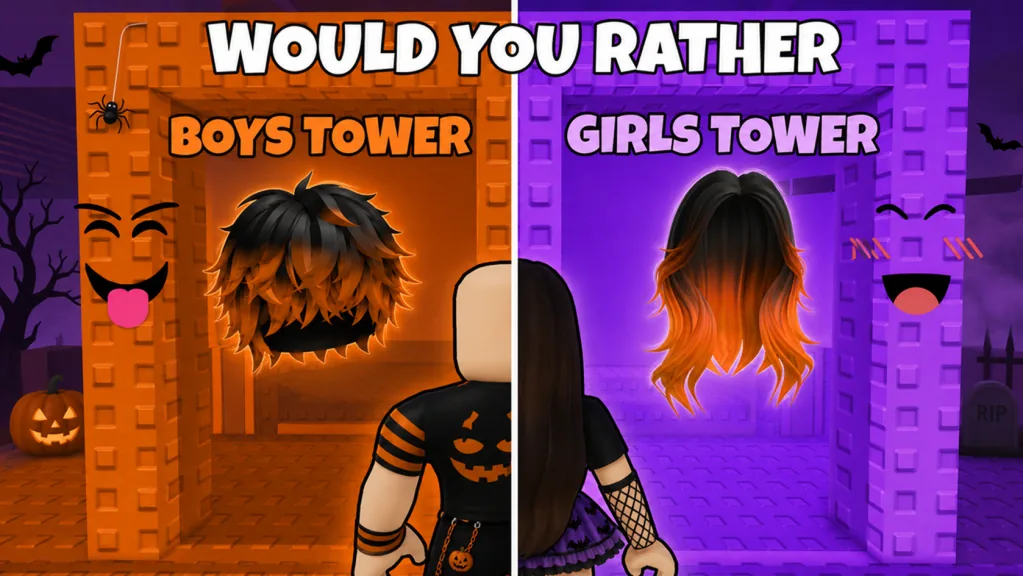
The Would You Rather Halloween Outfit Tower opposite gate strategy is a player-created replay method: finish one run, remember or record each visible route you took, then choose the other gate at the matching decision on your next run. It gives the second climb a clear purpose without pretending the game has a formal opposite-route mode.
The strategy can produce a different combination, but it cannot guarantee a new item at every stage. Items can repeat, concealed results stay unpredictable, and following the rule does not grant a special reward or badge.
Prepare the First Run
You need a route record that is simple enough to follow while climbing. Do not try to write a detailed item catalogue. Track only the decision pattern.
| Tracking method | Example | Best for |
|---|---|---|
| Side sequence | Left, right, right, left | A solo run with clear sides |
| Color sequence | Orange, purple, purple, orange | Gates with stable visible colors |
| Screenshot checkpoints | One image before each choice | Remembering the item as well as the route |
| Two-player split | One player takes each side | Comparing outcomes immediately |
Use side or color only as a temporary note. Orange and purple do not permanently own separate item pools. Check the live gates if an update changes their presentation.
The Opposite-Gate Loop
- Complete the first run normally.
- Record each choice before crossing it.
- Reach the final reveal and inspect the complete outfit.
- Begin a fresh run through the current replay flow.
- At each matching decision, choose the route opposite your note.
- If the layout or category no longer matches, use the closest fair fallback.
- Compare the two complete outfits at the top.
The challenge is about changing decisions, not forcing the game to reproduce an identical sequence. If the tower updates or random choices alter the order, preserve the spirit of the rule instead of restarting repeatedly.
Fair Fallback Rules
An opposite strategy needs a plan for hidden gates and changed layouts.
When the first run used a visible gate
Take the other visible route on the replay. This is the cleanest comparison because both choices were readable.
When the first run used Surprise Me
Choose the shown option on the replay. You cannot choose the “opposite” random result because the hidden pool and odds are not documented.
When both runs show different stages
Choose the opposite side once, then continue. Do not claim the route skipped a level or changed rarity; simply note that the current sequence did not line up.
When movement sends you back
Return carefully and resume your pattern. A fall does not turn the next door into a new decision unless the game presents the stage again.
Compare More Than Individual Items
At the top, compare the full styling result in four categories:
- Palette: Which run repeats colors more effectively?
- Silhouette: Which run balances hair, hats, backpacks, and props?
- Readability: Which outfit shows its smaller details clearly?
- Theme: Which run feels more consistently spooky, cute, funny, or chaotic?
This comparison is player judgment. The finish is a final outfit reveal; no reliable current material establishes official scoring, voting, or a winner bonus.
Turn Repeated Items Into a Better Test
If both runs receive one of the same items, do not discard the comparison. A repeat reveals how much the surrounding layers matter.
Build the repeated item differently on purpose. Pair it with another color, avoid the hair that hid it before, or use it as the focal point instead of a background detail. The contrast between the two combinations can be more useful than receiving two completely unrelated items.
Solo and Two-Player Versions
For a solo replay, screenshots or a short side sequence are enough. Keep the first run’s final outfit on screen long enough to remember its strongest pieces before restarting.
For two players, agree that one person takes the first chosen gate and the other takes the opposite gate at every stage. Stay close enough to compare category changes, but let each player move safely. Shared servers support multiple players, but the game does not create teams or an automatic vote for this challenge.
Common Rule Breaks
- Calling a hidden result the opposite of another hidden result.
- Expecting the same item categories in the same order forever.
- Treating a repeated item as proof the strategy failed.
- Claiming one side is the better route after one comparison.
- Promising a badge or reward for completing both runs.
- Recording colors but forgetting that the presentation can change.
The opposite-gate strategy succeeds when the second run reflects different decisions. It does not need to produce a perfectly unique inventory to be worthwhile.
FAQ
Is opposite-gate strategy an official mode?
No. It is an optional player-created replay rule built around the normal two-gate system.
Will the opposite route always give different items?
No. Different combinations are possible, but individual items can repeat.
How do I track my first route?
Record a short left-right or color sequence, or take screenshots before each gate choice.
What is the opposite of a Surprise Me choice?
Use the visible option on the replay. The hidden selection does not have a documented opposite result.
Does completing both routes give a reward?
No. This strategy does not grant a special reward, badge, or completion bonus.