Make Each Gate Solve One Styling Problem
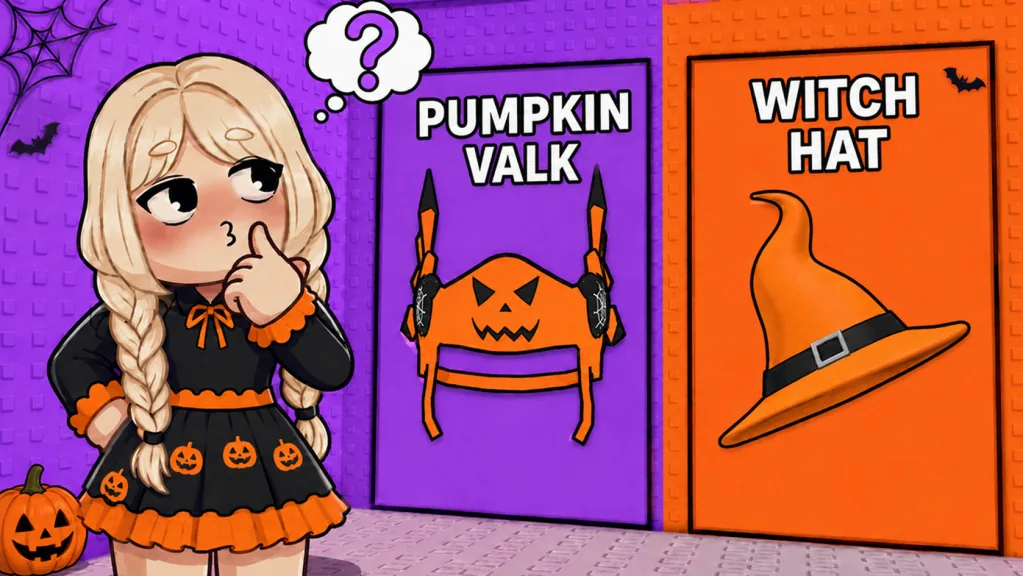
If you keep hunting for a perfect door, you will overthink the whole tower. Would You Rather Halloween Outfit Tower two gate choices work better when you build the outfit one step at a time. Each level presents two gates, and crossing one adds or changes part of your Halloween look.
Before you cross a gate, ask a single question: which option helps the outfit I have right now? A dramatic item is not automatically the right pick. A simple item that preserves your colors, silhouette, or favorite accessory can do more for the final look.
The dependable loop is:
- Pause before the pair of gates.
- Identify what each visible option would change.
- Check the outfit you already have.
- Choose for theme, contrast, or surprise.
- Move on without trying to undo every imperfect result.
Read the gates in your live run instead of following an old route chart. The item lineup and number of stages can change with updates.
How the Two-Gate System Builds an Outfit
The game groups its outfit changes into clothes, hair, and accessories. During a run, you can also encounter face or head presentation, pants, shirts, hair, and other cosmetic choices. The sequence can change, but the structure stays simple: every gate adds another layer to the finished look.
| Decision point | What to inspect | Useful question |
|---|---|---|
| Early choices | Body, face, or first clothing pieces | What theme can I build from this start? |
| Mid-run choices | Color balance and large silhouette changes | Does this support or fight my strongest item? |
| Hair and hats | Head shape and visual weight | Will this hide or crowd another detail? |
| Back, neck, or waist accessories | Layer overlap | Can the item still be seen from the front or back? |
| Late choices | Overall coherence | Do I need one bold accent or a quieter finish? |
Treat the categories as styling roles, not a guaranteed order. The game can be updated, and no reliable public list establishes exactly how many gates or categories every run contains.
Pick a Goal Before the First Door
Most messy runs begin with a player changing goals at every level. Pick one of three approaches before climbing:
- Theme first: Commit to a witch, pumpkin, undead, cute-spooky, or color-based idea. Choose whatever supports it.
- Best item first: Keep the strongest item you receive and build the rest of the outfit around it.
- Chaos first: Take hidden or random-style choices and judge the result only at the top.
Theme-first play gives you the most control. Best-item play is flexible when the opening choices are weak. Chaos-first play is ideal when variety matters more than a polished finish. None of these approaches changes the game rules or grants a special reward; they are simply better ways to make repeated choices feel intentional.
Use a Three-Check Decision Rule
When both gates look good, run three quick checks.
Check the color
Look for a color already repeated in the outfit. Matching that color creates unity. Choosing its opposite creates contrast. If the outfit already has several loud colors, a quieter option is usually easier to carry to the top.
Check the silhouette
Large hair, hats, backpacks, and props can dominate the avatar. Choose one main silhouette item, then let smaller pieces support it. Stacking every large option often hides the details you liked earlier.
Check the layer
Later hair or back pieces can visually cover earlier accessories. Rotate the camera when you have room and inspect both front and back. The game builds the look cumulatively, so a good individual item can still be a poor layer match.
Visible and Hidden Choices Need Different Thinking
A shown item is a control decision: you know what you are accepting. A concealed or Surprise Me-style choice is a variety decision: the result is not revealed until you commit.
Choose the visible option when your outfit already has a clear direction or one layer matters to you. Pick the hidden option when both visible choices feel weak, you want a fresh run, or you are deliberately playing a random challenge. Hidden gates trade information for surprise. They do not provide a rarity advantage, quality boost, or reward bonus.
Recover From a Bad Choice Without Ruining the Run
One awkward piece does not require abandoning the tower. Use the next decisions to reduce its impact:
- Repeat one of its colors elsewhere.
- Choose a larger focal item that pulls attention away from it.
- Avoid adding another competing pattern.
- Let the final outfit be funny or cursed instead of forcing a serious theme.
The top of the tower reveals the completed outfit. It does not grade the result, so strange combinations can still be part of the fun. If the look disappoints you, start another run and take the opposite route where possible.
Mistakes That Make Gate Choices Feel Random
- Sprinting through before the gate content is clear.
- Choosing every large accessory without checking overlap.
- Assuming one color route always owns a fixed item pool.
- Treating a hidden choice as guaranteed to be rare or better.
- Copying a previous path and expecting identical results.
- Restarting after one weak item instead of adapting the theme.
The two-gate system works best when you combine a small plan with enough flexibility to react. Decide what the current outfit needs, choose once, and keep climbing.
FAQ
How many gates are in one run?
Check the live tower for its current length, then keep climbing until you reach the final outfit reveal.
Does each side have a fixed item pool?
Do not treat orange and purple as permanent item pools. Judge the options displayed in your current run.
Are hidden gates better than visible gates?
No. Visible gates provide control, while hidden gates provide surprise.
Can one gate choice ruin the whole outfit?
Usually, no. Later colors, hair, and accessories can redirect the look or turn an awkward piece into a deliberate theme.
What should I do after reaching the top?
Review the final outfit, use the available save interface if you want to keep the look, or begin a new run with a different gate strategy.