Give every accessory a job
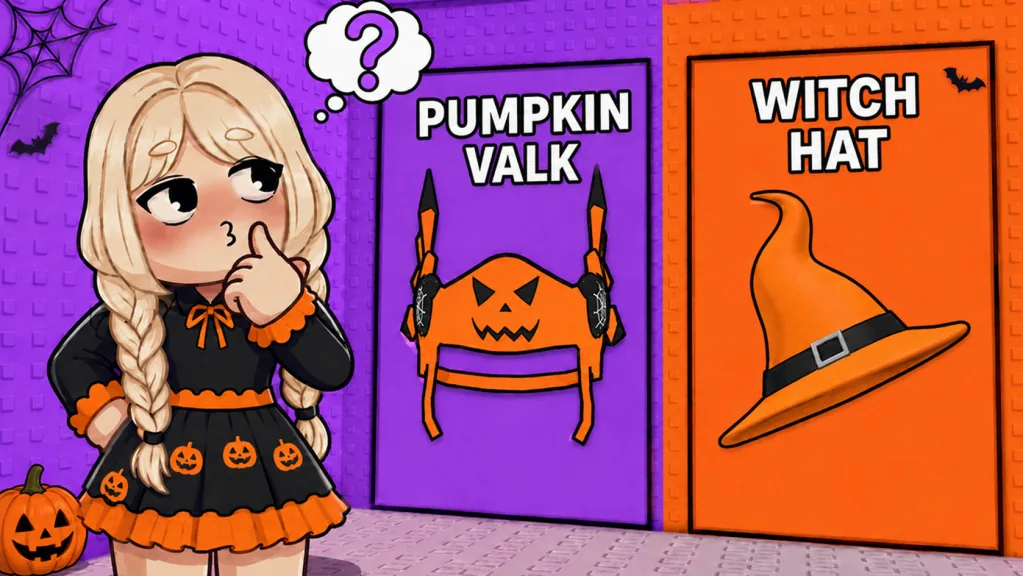
More accessories do not automatically make a better outfit. Pick one focal piece, add a supporting detail, and leave enough empty space for both to read. If a visible gate offers a large hat after you already chose dramatic hair, ask what the hat adds before walking through.
Would You Rather Halloween Outfit Tower officially uses accessories alongside clothes and hair. Hats, caps, scarves, necklaces, waist pieces, backpacks, bats, pumpkin details, and prop-like body accessories were present in current-build play. Those examples come from one recorded build, not a permanent inventory. Check the live gate instead of hunting for an old checklist item.
Think about where the item sits
Breaking the avatar into zones makes a crowded look easier to understand. These are styling zones, not official menu categories.
| Zone | Current-build examples | What to check before choosing |
|---|---|---|
| Head | Hats, caps, hair decorations | Does it disappear inside the hair? |
| Neck | Scarves, necklaces | Is the neckline already covered? |
| Waist | Belts and waist-mounted details | Does it separate the top and bottom? |
| Back | Backpacks and other back pieces | Will long hair hide most of it? |
| Prop or body | Bats, pumpkin details, curved prop shapes | Does it lead the look or just add clutter? |
You do not need to fill every zone. If a prop already creates a strong outline, a second large item can make both pieces harder to see.
A practical gate routine
Start by rotating the avatar and checking the front, side, and back. Pick out the one piece that currently leads the look. Then read both gates and decide whether the new accessory should lead, support, balance, or deliberately disrupt the outfit. Once it is applied, reassess. A favorite early item does not have to stay visually important forever.
This routine works when the selection changes between updates. It also handles hidden gates. You cannot preview the result there, so be ready to treat the surprise as the new constraint.
When each accessory type works
Hats and head details
A hat works when the top of the silhouette feels empty or the item completes a clear character idea. Hair comes first in the check. Tall hats and large hair can make a bold shape, but they can also merge into a block. Compact head details are easier to read when the hairstyle already carries the outline.
Neck pieces
Scarves and necklaces can connect the face to the clothes. Repeating a shirt or hair color often works well. If long hair covers the chest, the neck piece can disappear. Choose another visible item rather than expecting hidden controls to bring it forward.
Waist pieces
A waist accessory can separate a detailed top from equally detailed bottoms. Skip it if another item already crosses the same area. Let the waist piece add a break in the outfit instead of another patch of visual noise.
Back pieces
Backpacks deserve a camera check because hair has covered back accessories in current-build play. If the backpack is your favorite piece, protect it with narrower hair when that option comes up. Turn the camera after the gate to make sure the item still reads from behind.
Props and body details
One large prop can sell the whole Halloween idea. Bats, pumpkin details, and curved prop shapes have been seen, but the exact current selection is not published. Give a prop the lead role or keep it small. Two statement props usually fight each other.
Visible choice or hidden surprise?
Choose a visible accessory when you are solving a problem. Maybe the outfit needs a repeated color, an empty zone filled, or a cleaner back silhouette. Choose a hidden gate when surprise is the point of the run.
There is no documented accessory rarity system or probability advantage for concealed gates. If the surprise clashes, repeat one of its colors later or reduce the size of competing pieces.
Problems that show up at the final reveal
Filling every zone is the most common issue. The other is picking by theme alone. Two Halloween items can still overlap or compete for attention.
Old examples should not be treated as a permanent list. Do not attach Robux value, rarity, odds, or ownership claims to a recorded item unless the live game says so. Passing through a gate changes the look in the experience. It does not prove that the item enters your Roblox inventory.
Do not forget the rear view either. The final outfit is a full avatar, not a face thumbnail. Rotate the camera whenever a back piece or long hairstyle matters.
Review the final silhouette
At the top, look for the outfit’s main piece first. Then check whether its colors repeat and whether another layer covers it. Save the look only after reading the current save interface. On the next run, try a simple rule such as one large accessory or visible back-friendly choices. A narrow rule is easier to learn from than a complete reset of your style.
FAQ
What accessories are in Halloween Outfit Tower?
The official description confirms accessories as part of outfit building. Hats, scarves, necklaces, waist pieces, backpacks, bats, pumpkin details, and props have been seen, but there is no published permanent catalogue.
Are accessories added to my Roblox inventory?
That is not established. Treat gate selections as changes inside the experience unless the game displays an inventory grant.
How do I stop hair from hiding a back accessory?
Rotate the camera before choosing hair, then favor a shorter or narrower style when the back piece is your focal point.
Do hidden accessory gates have better items?
No published odds or rarity bonus supports that claim. Hidden gates are for surprise; visible gates are for control.
What is the best accessory combination?
There is no single best set. Use one focal accessory, one supporting detail, repeated colors, and enough empty space to keep the silhouette readable.