Choose Control or Surprise, Not “Good” or “Bad”
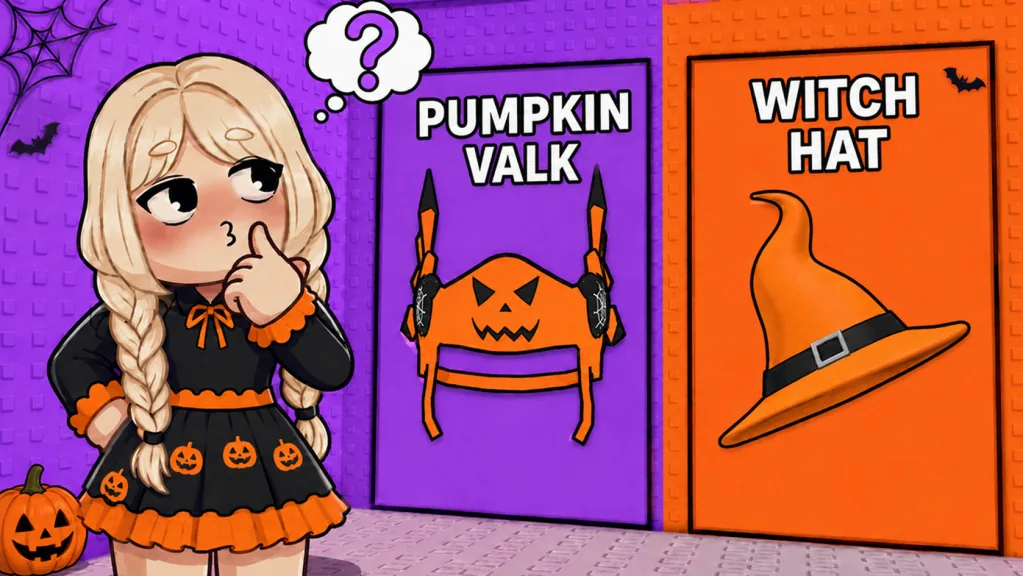
The choice between visible items and hidden gates comes down to control. Take a visible item when you care about the direction of your outfit. Pick a hidden gate when variety matters more. Neither gate type adds a rarity bonus, quality boost, or special reward.
The game deliberately mixes information and uncertainty. Some gates show the item before you choose. Others keep the result concealed until you walk through. That difference should shape your decision more than the color of the doorway or a guess about what the game “owes” you.
| Gate type | What you know | Best moment to choose it | Main risk |
|---|---|---|---|
| Visible item | The offered cosmetic is shown | Your outfit has a clear theme | A safe choice can feel predictable |
| Hidden gate | The result stays concealed until selection | You want surprise or dislike the shown option | The new item may clash with earlier layers |
When a Visible Item Is the Better Choice
Visible items are strongest when you already have something worth protecting. If your opening clothes establish an orange-and-black palette, a shown hair or accessory that repeats those colors is a dependable pick. If a large backpack or prop defines the silhouette, a smaller visible item can support it without creating another focal point.
Use a visible choice when:
- the item matches a color already used twice;
- you can see that its size will fit the current silhouette;
- it fills an empty styling role, such as hair or a neck detail;
- your last hidden choice produced a difficult layer;
- you are recreating a theme from a previous run.
Visible does not mean permanent ownership. The gate changes the look used during the run. Do not assume the item enters your Roblox inventory or changes your avatar outside the experience.
When a Hidden Gate Is Worth the Risk
Hidden gates are useful when the current run needs a shake-up. They also prevent every replay from becoming a cautious copy of the first one. A concealed result can give you a new focal item, a different color direction, or a deliberately chaotic combination.
Choose hidden when:
- the visible item clearly conflicts with your goal;
- the outfit has no strong theme yet;
- you are playing a random-only challenge;
- you want a second run to feel different;
- you are comfortable adapting after the reveal.
Do not attach invisible math to that choice. If an update adds odds, rarity details, or a pity system, check the live gate or menu for that information. Otherwise, treat the hidden result as a surprise rather than a more valuable item.
Read the Outfit Before You Read the Door
Players often stare at the next gates and forget the avatar standing between them. Turn the camera and audit the outfit first.
Front view
Check the face, shirt, neck area, and the strongest color. If the front is already busy, choose a simple visible option or accept that a hidden result could push the look into full chaos.
Side view
Look at the size of the hair, hat, and any carried prop. This view reveals whether a new large piece will make the silhouette feel top-heavy.
Back view
Check that a backpack or back accessory is still visible. Long hair can cover a back item, and the controls do not show a manual layer-order editor. Prevention is easier than repair.
A Practical Decision Ladder
Use this order when you have only a few seconds to decide:
- Protect the focal item. Avoid a choice that obviously covers or competes with it.
- Preserve the palette. Repeat a useful color or choose a controlled contrast.
- Fill a missing layer. Hair, clothes, and accessories play different visual roles.
- Break a tie with surprise. If both routes are equally useful, a hidden gate makes the run less predictable.
- Commit. Once the item applies, build from the new reality instead of judging the entire run immediately.
This ladder keeps visible choices from becoming boring and hidden choices from becoming thoughtless.
How to Recover After a Hidden Result
A random-looking piece is a styling problem, not a failed run. Identify its most usable trait: color, size, shape, or Halloween theme. Then make the next choice support that trait.
For example, if a hidden gate gives you a bright accessory, repeat its color with the next shown item. If it gives you large hair, avoid another oversized head piece. If it produces a funny combination, stop chasing elegance and build a deliberate cursed outfit around it.
The final reveal does not score or vote on the outfit. Your goal can be coherence, surprise, comedy, or simply seeing what the sequence creates.
Claims to Ignore
Be careful with route advice that promises:
- one side always gives “better” items;
- hidden gates have higher rarity;
- a certain color guarantees a specific category;
- hidden-only runs unlock a badge;
- the same route always repeats the same outfit.
None of those rules is established for the current experience. Use what the gate visibly communicates and check the live game after major updates.
FAQ
What is the difference between visible items and hidden gates?
A visible gate shows the cosmetic before selection. A hidden gate keeps the result concealed until you choose it.
Do hidden gates have better items?
No. Hidden gates exchange control for surprise, not better odds or rarity.
Should beginners avoid hidden gates?
No. Beginners can use visible choices to learn the layering system, then mix in hidden gates whenever they want more variety.
Can I remove a hidden item after choosing it?
Check the live Currently Wearing interface once before planning around removal. If it does not show a remove control, build around the piece instead.
Which gate should I choose when both look good?
Protect your focal item, compare color and silhouette, then use surprise as the tie-breaker.